

Detailed Explanation Of Core Forming Processes For Metal Products: Stamping, Cold Heading, And Die Casting
Oct 13, 2025
Leave a message
Abstract: This article aims to systematically explain the principles, technical characteristics, and application scenarios of three core forming processes-stamping, cold heading, and die casting-for metal product engineers, providing a fundamental basis for process selection during the product design stage.
I. Stamping Process: The Core Method for Sheet Metal Forming
Stamping is a method that uses dies and presses to plastically process metal sheet metal, achieving purposes such as separation, bending, and drawing.
Analysis of Core Operations:
1.Blanking: Includes blanking (obtaining the desired external shape of the blank) and punching (creating internal holes). The key to its quality lies in the control of the die clearance, which directly affects the cut-edge quality, dimensional accuracy, and burr size.
Bending: Forming the sheet metal into a specific angle and shape. The material's springback characteristics must be carefully considered, compensated for through over-bending design in the die.
Drawing: Transforming a flat blank into an open hollow part. This involves complex control of material flow and is prone to defects like wrinkling and cracking, requiring optimization through blank holder force, lubrication, and multiple drawing stages.
Process Advantages:
Extremely high production efficiency, suitable for large-scale automated production.
Excellent consistency and dimensional stability.
Relatively high material utilization rate, especially in progressive die applications.
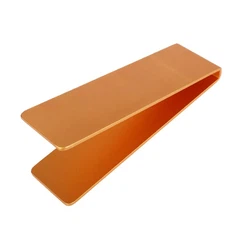
Typical Applications: Automotive body panels, appliance housings, connector terminals, various washers and spring clips.
2. Cold Heading / Cold Forming Process: The King of Efficiency in Bulk Forming
Cold heading is a process where pressure is applied to metal wire at room temperature, causing it to plastically deform within the die cavity, filling the mold to form the desired part.
Technical Core:
Material Deformation: Belongs to bulk forming under a triaxial compressive stress state, which can significantly refine the grain structure and form dense fibrous grain flow, greatly enhancing the part's mechanical properties, especially tensile strength and fatigue strength.
Near-Net Shape: Extremely high material utilization rate (can reach over 95%), with basically no cutting required, offering significant cost benefits.
Process Advantages:
Superior mechanical properties, producing high-strength, durable parts.
Extremely high material utilization rate, aligning with green manufacturing principles.
Ultimate production efficiency; high-speed cold heading machines can produce hundreds of parts per minute.
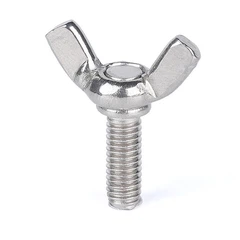
Typical Applications: Bolts, nuts, screws, rivets, and all other standard parts, as well as complex special-shaped parts (e.g., hollow rivets, combination screws).
3. Die Casting Process: The Solution for Complex Thin-Walled Components
Die casting is a process where molten metal is injected into a precision metal mold under high pressure and at high speed, and rapidly cooled to form a part.
Technical Points:
High Pressure, High Speed: Ensures the molten metal can fill complex, thin-walled cavities, replicating extremely high surface detail and dimensional accuracy.
Mold Cost: The molds (die-casting dies) have a complex structure, long manufacturing cycles, and high costs, making them suitable for high-volume production to amortize the cost.
Process Advantages:
Capable of producing parts with extremely complex shapes, clear contours, and thin walls.
Good product surface quality, often usable as-cast or with minimal finishing.
High production efficiency.
Typical Applications: Zinc alloy gearbox housings, aluminum alloy automotive parts, magnesium alloy laptop computer housings, high-end door locks, and metal decorative items.
4. Process Selection Decision Matrix
|
Consideration Dimension |
Stamping |
Cold Heading |
Die Casting |
|
Applicable Materials |
Sheet, Strip |
Wire, Bar Stock (Good Ductility) |
Non-Ferrous Alloys (Zn, Al, Mg) |
|
Part Geometry |
Sheet metal structures, 2D/3D surfaces |
Solid shaft-like, rod-shaped, symmetrical parts |
Complex 3D thin-walled parts |
|
Mechanical Properties |
Depends on the base sheet metal |
Significantly Improved (Work Hardening) |
As-cast structure, acceptable strength |
|
Production Volume |
Medium to Large |
Very Large |
Large to Very Large |
|
Relative Cost |
Moderate tooling cost, low unit cost |
Moderate tooling cost, very low unit cost |
Very high tooling cost, low unit cost |
Conclusion: Stamping, cold heading, and die casting are three major, parallel, and complementary core forming technologies. Engineers need to make precise process selections based on product shape, material, performance requirements, and production volume to ensure the manufacturability and economy of the product from the outset.
Send Inquiry