

The Ultimate Guide To Fastener Selection: A Complete Breakdown Of Bolts, Screws, Nuts, And Washers
Apr 09, 2026
Leave a message
In the trillions of connection applications across modern manufacturing, the choice of fasteners directly determines product reliability, safety, and assembly efficiency. Whether for heavy machinery or precision electronics, the right fastening solution lies at the heart of structural integrity.
Core Fastener Categories and Application Scenarios
Fasteners secure components through threads or deformation and fall into the following four primary categories:
Bolts: Typically used with nuts, suitable for structural connections subjected to heavy loads and shear forces (e.g., hex head bolts, U-bolts, anchor bolts).
Screws: Require no nut and can be driven directly into materials. Machine screws are used for metal-to-metal connections, while self-tapping screws are ideal for rapid assembly in plastics or thin sheet metal.
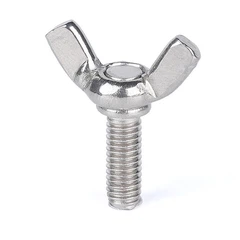
Nuts: Paired with bolts, lock nuts (with nylon inserts) effectively withstand high-vibration environments, while wing nuts allow for convenient hand-tightening without tools.
Washers: Cost-effective auxiliary components. Flat washers distribute pressure, while spring washers and lock washers provide critical protection against loosening.
Key Selection Factors: A Demand-Driven Approach
When selecting fasteners, engineering teams are advised to focus on three core questions:
Load Requirements: Is high-strength load bearing required?
Maintenance Frequency: Will the connection require frequent disassembly?
Operating Environment: Is the application subject to high vibration, corrosion, or elevated temperatures?
By thoroughly analyzing specific application scenarios, an optimal balance between fastener performance and cost can be achieved. Visit our website to explore more fastening solutions and browse our product catalog.
Send Inquiry